Responsible Travel in Madagascar

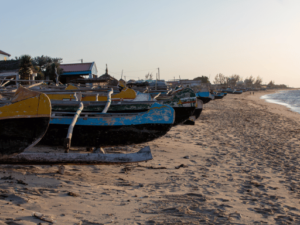 South of Toliara, Anakao is a pretty little Vezo fishing village with colorful boats moored on the sand. With hotels to suit all budgets, it rivals Ifaty for beaches and opportunities to diving, frombird watching andmangrove tours.
If you don't like seafood, dining options in Anakao will be very limited. Note that fresh water is difficult to obtain in this arid region, so many hotels do not have running water.
Anakao is most easily accessible by a 35 km boat transfer from Toliara (1 hour).
It was previously possible to get there via a dirt road passing through Saint-Augustin Bay (46 km).
If you are not traveling by car, the secret to getting to Anakao on a budget is to take a bush taxi to Sarodrano, then find a sailing canoe to take you across the river mouth and around the headland to Anakao (it takes less than an hour if the wind is on your side), or ask a boatman to take you across the river to Soalara, where you can take the Beheloka bush taxi at night to Anakao.
The beach around the village itself is very busy—local life revolves around fishing—and is not particularly clean, but a little further along the coast in both directions, you will find good beaches for swimming and sunbathing.
A day spent exploring the area on foot is rewarding. Take the path behind the village heading south. On the outskirts of Anakao, you will find some interesting graves, then a small peninsula with a few more graves. It is still possible to find fragments of subfossil eggshells from the long-extinct elephant bird here. It is illegal to take these eggshells out of the country.
Ornithologists would do well to take an early morning walk along one of the trails that crisscross the thorny forest, setting off shortly before sunrise.
An old mining railway colonial connects Soalara (north of Anakao) in Sakoa, about 50 km away. It is no longer operational, but you can take a quad bike tour there. 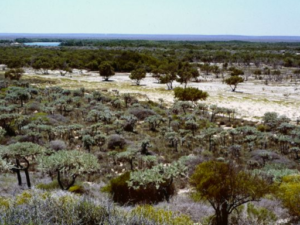
The Mangoro mangrove is about an hour's walk from Chez Diego beach, but it is more rewarding to explore this area by boat. The birdlife is abundant, with bee-eaters, vasa parrots, flamingos, harriers, and plovers among the species observed.
Water sports
Most hotels provide their guests with snorkeling equipment, including masks and snorkels.
Nearby islands
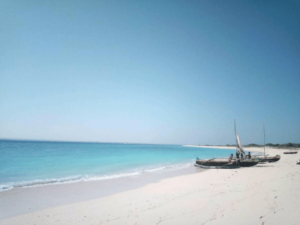 4 km west of Anakao is Nosy Ve, a sacred site and now a protected area. It has a long history of European domination, with the Dutch landing there in 1595. It was officially taken over by the French in 1888 before their conquest of the continent, although it is difficult to understand why: it is a small, flat island covered with scrub.
What makes Nosy Ve special for modern invaders is the tranquility of its white beaches, snorkeling on its fringing reef, and the world's southernmost breeding colony of red-tailed tropicbirds. They breed year-round at nesting sites located under bushes at the southern end of the island.
A fee must be paid to visit the island. Camping is prohibited and there are no buildings. The success of visits depends on the wind and tide (strong winds make snorkeling difficult; high tide is equally unappealing for snorkelers and beach walkers). This is why visits with fishermen using canoes, which can dock at low tide, are more fruitful than visits with large motorboats.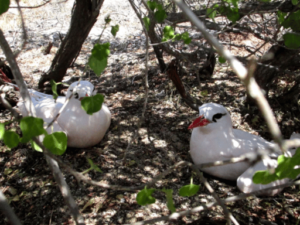
As natural shade is scarce on the island, make sure your boatman sets up a sail on the beach to protect you from the scorching sun. Fady laws prohibit harming tropical birds and defecating on the beach. Tourists must also respect their ancestors by staying away from graves.
Further south, Nosy Satrana is a small, peaceful island closer to the shore (in fact, it can be reached on foot via a sandbar at low tide). It offersexcellent diving and snorkeling opportunities, but no tropical birds.